


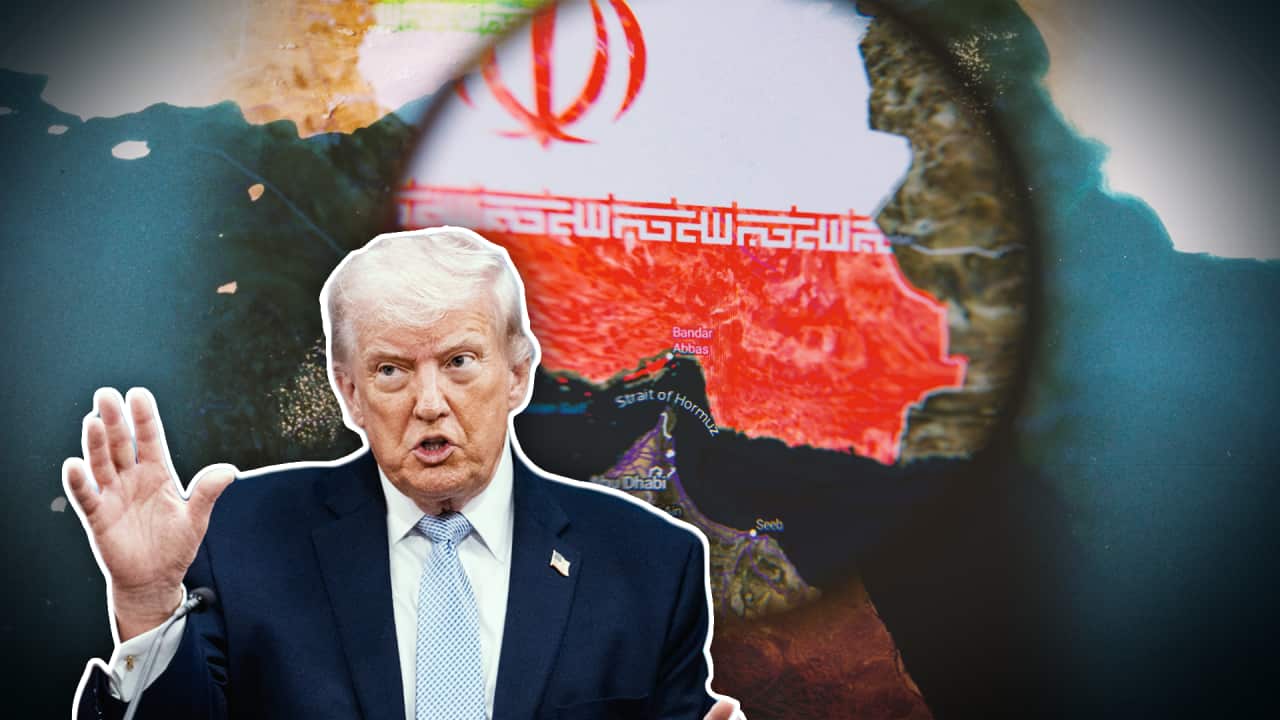
More than six months into the conflict between the United States, Israel, and Iran, oil flows through the Strait of Hormuz have climbed back to levels approaching 90 percent of what they were before the war began, according to figures presented by the Trump administration, a remarkable recovery given that traffic through the critical waterway collapsed by as much as 95 percent in the opening days of the conflict.

Energy Secretary Chris Wright told reporters this week that more than 17 million barrels of oil transited the strait on a single day earlier this month, describing it as a wartime record. Before the conflict began in late February, roughly 20 million barrels per day of crude oil and refined products moved through the strait, a chokepoint that carries approximately one fifth of the entire world’s oil trade. If Wright’s figures hold, that would put current flows at somewhere close to 85 to 90 percent of pre-war volume, a dramatic turnaround from the near total shutdown that gripped global energy markets when Iran first moved to close the waterway in response to American and Israeli strikes.
The scale of the initial disruption cannot be overstated. In the first fifteen days of the war, only 92 ships braved passage through the strait, according to data compiled by the International Monetary Fund’s Portwatch initiative in partnership with Oxford University. For comparison, more vessels made that same passage on a single ordinary day, February 27, the last full day before hostilities began. Daily traffic that had averaged roughly 138 ships before the war fell to a bare handful in the war’s opening weeks, at one point dropping by as much as 97 percent according to United Nations trade data. Oil prices spiked accordingly, briefly touching nearly 120 dollars per barrel as markets absorbed the shock of losing access to a fifth of the world’s oil supply overnight.
That the strait has clawed its way back to anything approaching normal function is a direct result of a sustained and multifaceted campaign by the Trump administration, one that combined military pressure on Iran’s ability to threaten shipping, expanded naval escort operations, insurance guarantees for commercial shippers willing to risk the passage, and aggressive diplomatic coordination with Gulf allies to build out alternative export capacity. This was not an accident of market forces working themselves out. It was the product of deliberate American policy.
The military component has been central to the recovery. President Trump has repeatedly and publicly warned Iran that any attempt to further restrict oil flow through the strait would be met with overwhelming retaliation, at one point promising to strike Iranian targets “twenty times harder” than previous American action if Tehran moved to choke off shipping again. That kind of unambiguous deterrent messaging, backed by the credible use of American military force earlier in the conflict, has plainly influenced Iranian calculations about the costs of continuing to blockade international shipping lanes.
Beyond deterrence, the administration has worked to physically secure passage for commercial vessels. The Pentagon deployed additional troops to the region, including soldiers from the 82nd Airborne Division, to bolster security around the waterway, and the U.S. Navy has expanded its presence to provide escort capability for tankers willing to make the transit. Energy Secretary Wright indicated that the military has been able to facilitate the passage of roughly 10 million barrels of oil per day through a southern channel along the Omani coast, a route that keeps vessels farther from Iranian coastal defenses and missile batteries.
The administration has also pursued a parallel strategy of reducing the world’s dependence on the strait altogether by maximizing alternative export routes. Saudi Arabia’s East-West pipeline, which carries crude overland to the Red Sea and bypasses the strait entirely, has been pushed to capacity, reportedly rerouting upward of 5 million barrels of oil per day away from the vulnerable chokepoint. Combined with similar efforts by the United Arab Emirates to expand pipeline capacity, Gulf producers have meaningfully reduced their collective exposure to any future disruption in the strait, a structural change that will pay dividends for global energy security long after this particular conflict ends.

It should be acknowledged that independent analysts have offered somewhat more conservative estimates of the current flow than the administration’s own figures suggest, and a fair accounting of this story requires presenting that side as well. Goldman Sachs analysts estimated in late August that exports of crude and petroleum products from the broader Gulf region had risen to between 15 and 16 million barrels per day, describing that figure as roughly two-thirds of pre-war levels rather than the 85 to 90 percent range cited by administration officials. Tanker tracking firms including Kpler and analytics from JPMorgan have suggested that direct flow through the strait itself, as distinct from total regional exports including pipeline volume, may be running closer to 4 to 10 million barrels per day depending on methodology.
Part of this discrepancy reflects a genuinely difficult measurement problem rather than dishonesty on anyone’s part. A growing number of tankers have taken to operating with their satellite transponders switched off, a practice known in the industry as going dark, specifically to avoid detection while transiting the strait. This makes precise real-time verification extraordinarily difficult for outside trackers who rely primarily on transponder data and satellite imagery, whereas the U.S. military has access to far more comprehensive intelligence and surveillance capabilities in the region, including assets that can track vessel movement independent of self-reported transponder signals. It stands to reason that the government with the most sophisticated monitoring capability in the theater would have visibility into flows that commercial tracking services simply cannot replicate.
Whatever the precise figure, the broader trend is not in dispute. Even Goldman’s more conservative estimate represents a massive recovery from the trough of just 5 to 6 million barrels per day recorded in March, near the height of the initial shutdown. Whether the true figure today is 65 percent of pre-war levels or approaching 90 percent, the trajectory over the past six months has been unmistakably and dramatically positive, a trend line that reflects sustained improvement under this administration’s watch rather than a static or worsening crisis.
The path to this recovery was not linear, and it is worth recalling how fragile the situation remained for much of the conflict. A preliminary memorandum of understanding between the United States and Iran in mid-June briefly raised hopes of a durable ceasefire, and flows did begin climbing meaningfully during that window, reaching an estimated 50 percent of pre-war levels through the strait itself and nearly 80 percent for the broader Persian Gulf region. That progress evaporated almost overnight when the agreement collapsed and fighting resumed in July, a sobering reminder of just how quickly gains in this theater can be reversed when diplomacy fails.
That the administration has now pushed flows back up and, by its own accounting, beyond where they stood even during that brief ceasefire window speaks to the resilience of the strategy pursued since the conflict reignited. Rather than relying solely on a fragile diplomatic truce that Iran proved willing to abandon, the administration shifted toward a strategy of building durable physical and military solutions, expanded escort capacity, hardened alternative pipeline routes, and continuous deterrent pressure on Tehran, that do not depend on Iranian good faith to remain effective.
The economic stakes of this recovery extend well beyond the Middle East. American consumers, already grappling with the broader inflationary pressures of recent years, have felt the impact of every spike in crude prices at the gas pump. The U.S. Energy Information Administration’s most recent market outlook still projects that oil production in the region will not fully return to pre-conflict levels until early 2027, with Brent crude averaging around 87 dollars per barrel for the year, a reminder that the disruption’s consequences will linger even as the underlying flow numbers continue improving. Every additional million barrels the administration succeeds in coaxing through the strait, or around it via pipeline, represents real relief for American households and businesses still absorbing higher energy costs.
President Trump’s recent, characteristically bold suggestion that the waterway might one day be renamed in his honor drew predictable mockery from critics, but it also reflected a genuine sense within the administration that American policy has fundamentally altered the strategic balance in the strait. Whatever one makes of the rhetorical flourish, the underlying claim, that Iran has lost effective control over a waterway it once threatened to shut down indefinitely, is substantially supported by the trend in the data, even accounting for the more conservative independent estimates.
